
Free Consultation
Call Us
(720) 379-6363
Text Us
(719) 534-3132






 Recent Posts
Categories
Archive
Recent Posts
Categories
Archive
Written by Remington Fang
When a pedestrian is struck by a vehicle on a Denver street, the immediate question is who bears responsibility. Fault in pedestrian accidents is determined by analyzing negligence, whether drivers or pedestrians breached their duty of care by violating traffic laws, such as speeding or failing to yield at crosswalks. Investigations rely on evidence like police reports, traffic camera footage, and witness statements to assign percentages of liability to one or both parties. Understanding how fault is determined in pedestrian accidents shapes every decision that follows, from filing a claim to negotiating a settlement. At Fang Injury & Accident Lawyers Denver, we help injured clients build the strongest possible case from the outset.
Contact our Denver Injury Lawyers
Fault analysis in a pedestrian accident begins by examining whether one or both parties failed to act with reasonable care. Colorado law applies a negligence standard, meaning each party had a duty to behave in a way that avoided foreseeable harm to others. When that duty is breached, and someone is injured, liability follows. Investigators, insurers, and courts examine the full picture of what happened before and during the collision to assign responsibility accurately.
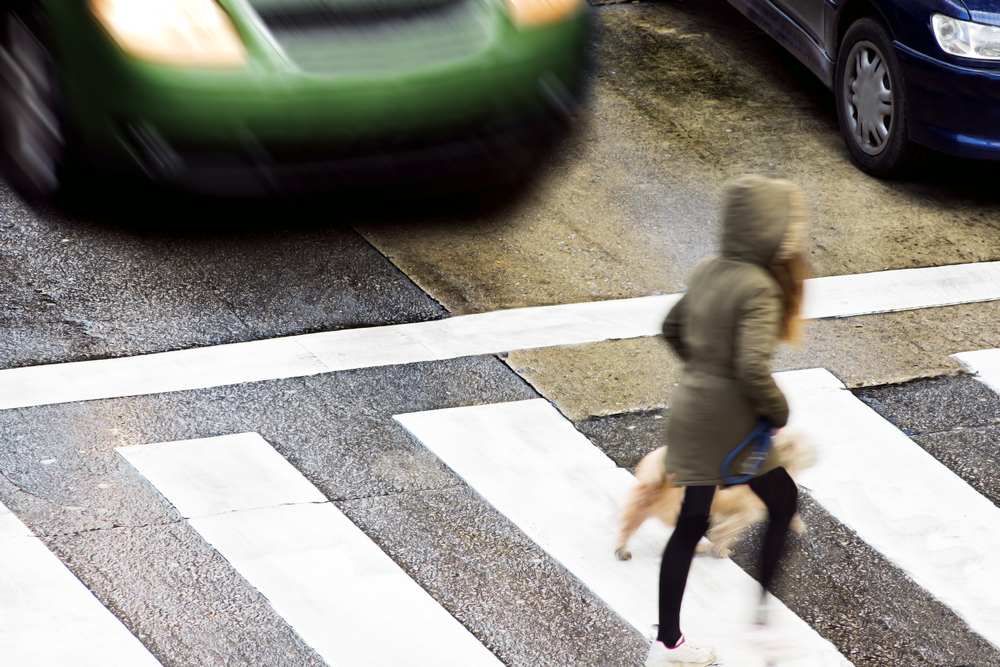
The evidence gathered after a crash forms the foundation of any fault determination. Police reports document the responding officer’s observations, driver and pedestrian statements, and any citations issued at the scene. Traffic camera footage and dash camera recordings can confirm the sequence of events with clarity that witness memory alone cannot match. Physical evidence, including skid marks, vehicle damage patterns, and the point of impact, also informs reconstruction efforts.
Legal standards from the Colorado traffic code define what each party was required to do. A driver who ran a red light or failed to yield where required stands on clearly documented ground. A pedestrian who crossed against a signal faces a different analysis entirely.
Drivers carry a significant legal obligation to watch for pedestrians, but that obligation is not unlimited. Colorado law requires drivers entering or crossing a roadway from a non-roadway location to yield to all approaching vehicles and pedestrians, and any violation constitutes a class A traffic infraction under Colorado Revised Statutes § 42-4-704. At marked crosswalks and controlled intersections, drivers must yield when a pedestrian is lawfully present.
Right-of-way rules are situation-specific. A pedestrian crossing mid-block outside a marked crosswalk does not automatically hold the right of way. A driver traveling at a lawful speed through a green light is not expected to anticipate a pedestrian who suddenly steps from between parked vehicles. The duty to yield exists within defined conditions, and when those conditions are not present, fault analysis shifts accordingly.
Injury shouldn’t define your story. Let me help you write the next chapter — one where you get justice.


Remington W. Fang
Pedestrians are not automatically protected from fault simply because they were on foot. Colorado law evaluates the conduct of every party involved, and a pedestrian who ignored a crossing signal, entered traffic unexpectedly, or walked along a roadway where a sidewalk was available may bear a share of responsibility for the collision.
When a pedestrian shares fault, Colorado’s comparative negligence framework governs the outcome. Under Colorado Revised Statutes § 13-21-111, contributory negligence does not bar recovery so long as the injured party’s share of fault does not equal or exceed that of the party against whom they are claiming. A pedestrian found 30 percent at fault would see their compensation reduced by that same percentage. Recovery is eliminated only when assigned fault reaches 50 percent or higher.
Certain situations appear repeatedly in pedestrian accident claims, and each carries distinct fault implications under Colorado law.
Crosswalk accidents involve some of the most contested fault questions. A driver who fails to yield to a pedestrian lawfully in a marked crosswalk is clearly in violation of traffic law. A pedestrian who steps into a crosswalk against a “Don’t Walk” signal, however, introduces shared liability into the analysis.
Jaywalking incidents arise when a pedestrian crosses outside a designated crossing point. Fault typically falls more heavily on the pedestrian, though a driver who had adequate time and distance to stop may still share responsibility for failing to react.
Parking lot collisions present unique challenges because standard right-of-way rules apply differently in private lots. Drivers exiting parking spaces carry a duty to check for pedestrians, but the absence of marked crosswalks means pedestrian movement is evaluated more carefully for contributory conduct.
Each scenario illustrates why how fault is determined in pedestrian accidents requires a fact-specific analysis rather than a blanket assumption.
Insurance adjusters conduct their own independent fault investigations, and their conclusions do not always align with what law enforcement documented at the scene. Adjusters review the police report, interview both parties, examine available footage, and apply internal liability guidelines to reach a fault percentage. Their financial interest in limiting payouts means pedestrians are frequently assigned a higher share of responsibility than the facts support. A recorded statement given without legal guidance can be used to shift blame, making prompt representation essential to protecting the accuracy of the fault determination.
Fault disputes after a pedestrian accident move quickly, and the evidence that matters most can disappear just as fast. Understanding how fault is determined in pedestrian accidents is the first step toward protecting a claim, but navigating Colorado’s comparative fault rules, insurance negotiations, and legal deadlines requires experienced guidance. Fang Injury & Accident Lawyers Denver is ready to evaluate your case, challenge unfair fault assessments, and pursue fair compensation on your behalf. Call us at 720-379-6363 today for a free consultation.
A Colorado Springs native with a lifelong passion for standing up to bullies, Remington fights for the injured against corporations that put profit over people. Raised in a family devoted to service and healing, he brings compassion and grit to every case. A graduate of the University of Northern Colorado and the University of Arkansas School of Law, Remington has recovered millions for clients with Fang Injury Lawyers. He believes no injury should silence the human spirit — and he won’t stop fighting until justice is served. See Remington in AVVO.
Remington W. Fang

This page has been written, edited, and reviewed by a team of legal writers following our comprehensive editorial guidelines. It was approved by Remington W. Fang, our Founding Partner, who brings over 10 years of experience as a personal injury attorney.
 call us at (303) 710-8621