
Free Consultation
Call Us
(720) 379-6363
Text Us
(719) 534-3132






 Recent Posts
Categories
Archive
Recent Posts
Categories
Archive
Written by Remington Fang
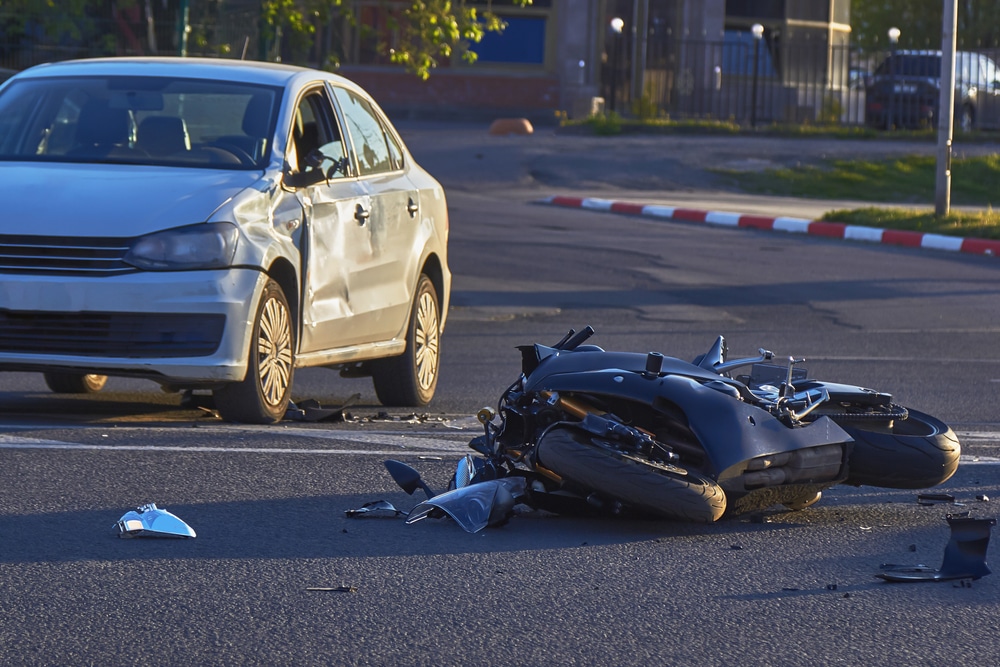
Motorcycle crashes in Denver often lead to severe injuries because riders travel without the protective structure surrounding occupants inside passenger vehicles. Safety research frequently examines at what speed a motorcycle crash is fatal, and many studies show fatality risk rises sharply once travel speeds exceed roughly 55 miles per hour. At higher speeds, impact force increases dramatically, and a rider’s body absorbs most collision energy during a motorcycle accident.
Fang Injury Lawyers helps injured riders understand their legal rights and pursue compensation after serious motorcycle accident injuries.
Higher travel speed dramatically increases the danger riders face in any collision. Once velocity rises beyond roughly 55 mph, crash forces intensify sharply, and the likelihood of catastrophic injury or death climbs with them. Reaction time shortens, stopping distance lengthens, and greater energy transfers directly into the rider’s body upon impact.
Kinetic energy rises rapidly with velocity, meaning a motorcycle at highway speed produces far greater destructive force than one moving through city traffic. According to the Colorado Department of Transportation (CDOT), speed claimed 237 lives on Colorado roads in 2024, more than both impaired driving and unbuckled crashes combined. Riders asking at what speed a motorcycle crash becomes fatal often find that crash dynamics matter more than any single threshold.
Unlike passenger vehicles, motorcycles offer no reinforced cabin, seatbelts, or airbags. During a crash, the rider frequently strikes pavement, another vehicle, or roadside objects. Even at moderate speeds, this exposure can cause spinal trauma, traumatic brain injuries, fractures, or internal bleeding. Higher speeds multiply that force, and medical research consistently points to head trauma, chest injuries, and internal organ damage as the most common outcomes in high-speed collisions.
Contact our Denver Injury Lawyers
No single speed automatically makes a motorcycle crash fatal. Outcomes depend on impact angle, surrounding traffic, protective gear, medical response time, and roadway conditions. Some riders survive violent highway crashes due to favorable impact dynamics or proper equipment, while others sustain fatal injuries in lower-speed collisions involving severe head trauma or a direct hit from another vehicle. Answering at what speed a motorcycle crash is fatal requires looking at the full picture, not just the number on the speedometer.
Motorcycle crash severity depends on more than speed alone. Where a vehicle makes contact, how quickly emergency responders arrive, and whether a rider was wearing protective gear all shape the outcome. A side collision can send a rider into oncoming traffic, while a rear impact may throw them across the roadway entirely.
In Denver, emergency response tends to be faster than in rural areas, which can make a meaningful difference in survival. Helmets and armored gear reduce the risk of traumatic brain injuries, fractures, and severe abrasions, which is why two crashes at similar speeds can produce very different results.
Speed remains one of the most significant factors in motorcycle accident severity, but other conditions also shape crash severity. Roadway hazards, traffic behavior, protective gear, and impairment all play a role.
A crash does not always require high speed or a negligent driver. Uneven pavement, poor lighting, and reduced traction from rain or debris can cause riders to lose control on their own, while drivers who fail to check blind spots or make sudden lane changes add a separate layer of risk. Protective gear plays a significant role in survivability. CDOT reported that 73 of Colorado’s 165 motorcycle fatalities in 2024 involved riders not wearing helmets, underscoring how much gear influences outcomes. Alcohol or drug impairment compounds all of these risks by slowing reaction time and reducing a rider’s awareness of changing conditions.
Injury shouldn’t define your story. Let me help you write the next chapter — one where you get justice.


Remington W. Fang
Speed is frequently a central issue in motorcycle accident claims, as insurance companies and attorneys examine travel speed when evaluating negligence. Investigators examine physical evidence from the crash scene, including skid marks, damage patterns, and debris fields, to estimate each vehicle’s speed.
Modern vehicles also contain electronic data recorders that may capture speed, acceleration, and braking data in the seconds before a collision. Accident reconstruction experts combine that data with scene evidence to build a clearer picture of what happened. In serious cases, their testimony, alongside medical experts, can be decisive in establishing how the crash occurred and who is responsible.
Colorado follows a modified comparative negligence rule, so each party’s share of fault directly affects financial recovery. Insurance companies often use speed to shift blame onto riders, even when another driver caused the crash. Determining true liability requires a thorough review of:
A driver who turns left across a rider’s path may bear primary responsibility even if the rider was slightly over the speed limit. Excessive speed, however, combined with reckless conduct, can reduce a rider’s compensation under Colorado law.
A serious motorcycle crash can leave riders facing mounting medical bills, lost income, and an insurance company looking to minimize what they pay, especially when questions arise around coverage such as Colorado uninsured motorist coverage. At Fang Injury Lawyers, our attorneys investigate claims, analyze crash evidence, and fight for full compensation on behalf of injured riders and their families, much like a trusted motorcycle accident lawyer in Denver would in complex injury cases. If you’ve been searching for answers about whether a motorcycle crash is fatal after a collision, our team can help with the legal side of your recovery as well. Call 720-379-6363 today for a free consultation.
A Colorado Springs native with a lifelong passion for standing up to bullies, Remington fights for the injured against corporations that put profit over people. Raised in a family devoted to service and healing, he brings compassion and grit to every case. A graduate of the University of Northern Colorado and the University of Arkansas School of Law, Remington has recovered millions for clients with Fang Injury Lawyers. He believes no injury should silence the human spirit — and he won’t stop fighting until justice is served. See Remington in AVVO.
Remington W. Fang

This page has been written, edited, and reviewed by a team of legal writers following our comprehensive editorial guidelines. It was approved by Remington W. Fang, our Founding Partner, who brings over 10 years of experience as a personal injury attorney.
 call us at (303) 710-8621